"I looked down at my hands folded on my lap and suddenly noticed my hands are white," said the woman from Australia.
She was describing to me her experience riding a New York City bus during her visit to the U.S. Her bus, the B41, was lurching down Flatbush Avenue delivering dreary commuters home on a cold Friday evening.
"It was the first time I actually felt white. I mean, I know I'm white but I was the only white person on the bus. And at that moment looking around at all those brown faces, I felt white. My white skin seemed strange to me."
Dorthea is from Sydney. She's in her 60s and that bus ride was the first time in her life that she experienced being the only white person in a large group. (Welcome to my life, I thought to myself.)
I listened to her story and smiled. This was a moment of enlightenment for her but I had to explain that what she'd just experienced was an everyday occasion for me and millions of other Black Americans. For my entire life at some point, I've been the only black person in a classroom, a room, a bar, a newsroom or a board meeting ... the list goes on. Here in melting-pot New York, I'm always amazed at how you can walk into a certain neighborhood or trendy bar - even in my beloved Brooklyn neighborhood - and be the only black person. It's just something you get used to ... either that or you end up paranoid and hateful.
She'd come to NY to study the philosphy of Pragmatism http://atheism.about.com/od/philosophyschoolssystems/p/pragmatism.htm with a professor here in the States - William James. Turns out he'd discovered this form of philosophy, which deals more with the realism of what "is" and less than the mental pondering about why things are what they are. So, Dorthea was dealing with the realism of being white for the first time, she said.
This is a fairly new philosophy, discovered in the 20th century. But it seemed like lots of black folks I know have been practicing "Pragmatism" since we arrived in this country. Dealing with our very real life situations is the best hope many have of achieving any measure of success.
As I listened to her story about riding the B41, I couldn't help asking her how in the world she was just noticing her whiteness. I mean this is a very white woman - Aussie accent and all. She told me that she had never thought about it before, never had to in all her years.
She told me that her whiteness is not a part of her but just something that is.
"It's separate from my "self," she explained, pointing to her heart. They are two different things.
How do you explain to someone like Dorthea that for Black Americans, being black is not separate from our "self." And that not a day goes by that I don't wake up or walk down the street or sit in a corporate board room at work and know that I'm black ... and a woman. It's the two things that are always with me. And on the rare instances I've dared to forget for a second someone is always around to remind me. Now, of course, they don't have to blurt out: "Hey, did you know you're black?" Nah, that would be rude.
Instead, I get reminded with comments by my mostly white peers like: "Oh my, you are such an intelligent, well-spoken woman." or "Oh my goodness, I can't believe you've accomplished so much ... and your a vice president! How wonderful!" (Okay, it is pretty nice. but it's not a miracle and it took a lot of hard work and sacrifice. And it's not like I'm running The Company - yet, anyway.)
We black folks also like to remind one another that we're black. God forbid one of us get a little too uppity or multicultural for our own good. Like our President, when he had the audacity to think he could run a nation. It took many in the black community a long time to stop being mad at him for thinking he had a right to go after his dreams. Good thing we have a few folks who know that where you're from should never limit where you can go.
Dorethea tried to understand what I was telling her about why it's nearly impossible for me to ever forget I'm black. And I got the feeling that she felt sorry for me in some way, especially when she started apologizing for historical atrocities like slavery and the treatment of the Aborigine people in her country. But I wasn't asking for her sympathy, or pointing blame.
What Dorthea didn't quite understand is that I don't ever want to separate my "blackness" from my "selfness." Being a Black Woman is my greatest strength - a blessing. And it's a part of me that I wear proudly every day of my life.
###


photo of the day
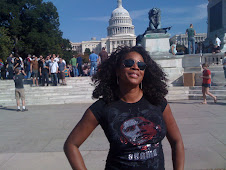
photo of the day
About Me

- BrooklynChic
- I'm a passionate person. I work hard, play harder and love deeply - but only a few people get that. I care about people and the world around me. I love sports (Eagles/Yankees/Knicks), have a great career, a great kid, a silly dog. I'm divorced and happily dating! life's good. So why blog? I want to make a difference in this life. Every day, my friends and I debate, laugh or cry at the stuff that happens to us all. No matter who we are - regardless of race, gender, religion, politics, economic status, sexual identity or where we live - we are all experiencing the same things. We go through life looking for answers and hopefully finding love along the way. I am a realist and idealist - I think it's possible to be both - and I want to share my opinions, ideas concerns and solutions with other like-minded people out there who are brave enough to be their true selves and try and make a difference in this lifetime. Are you in?
No comments:
Post a Comment